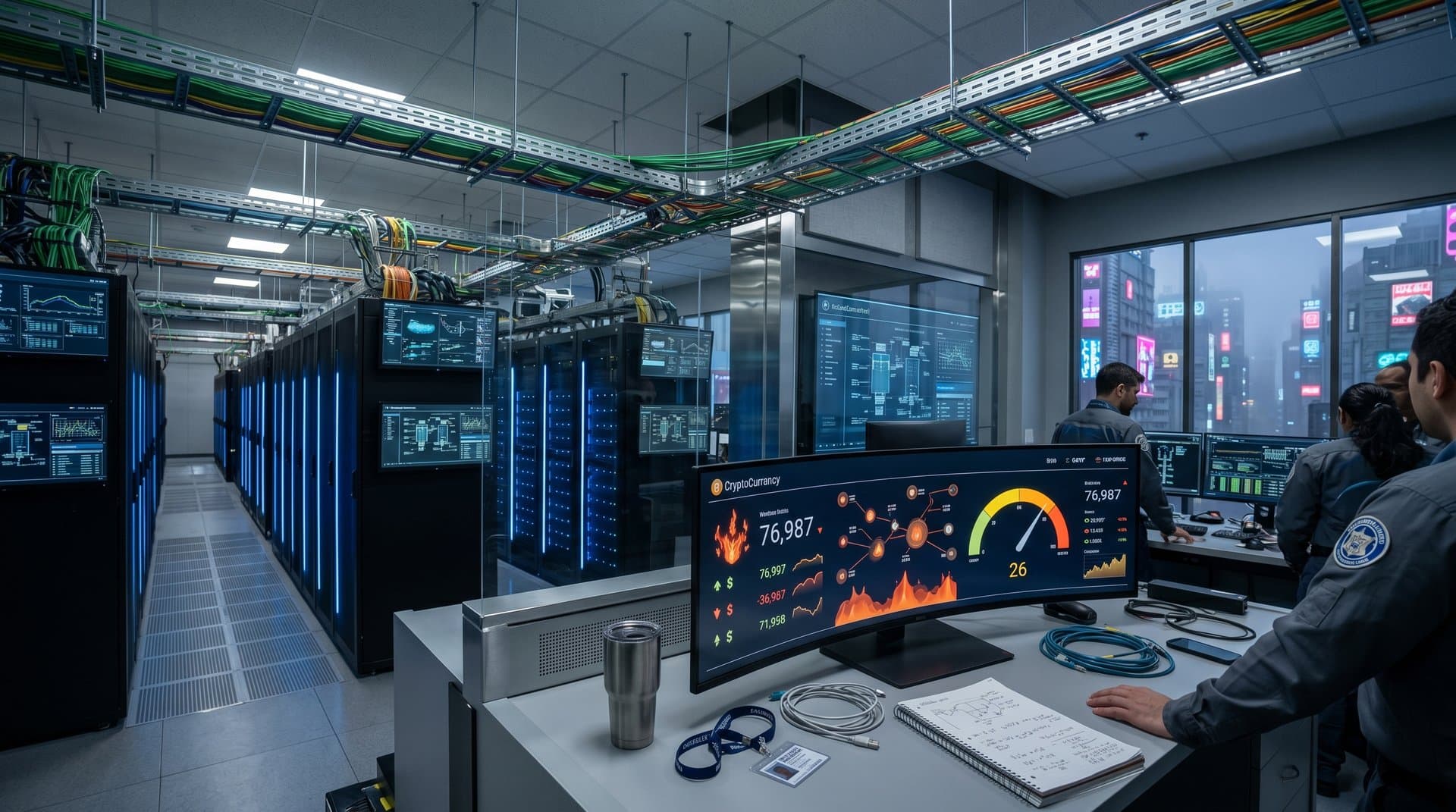
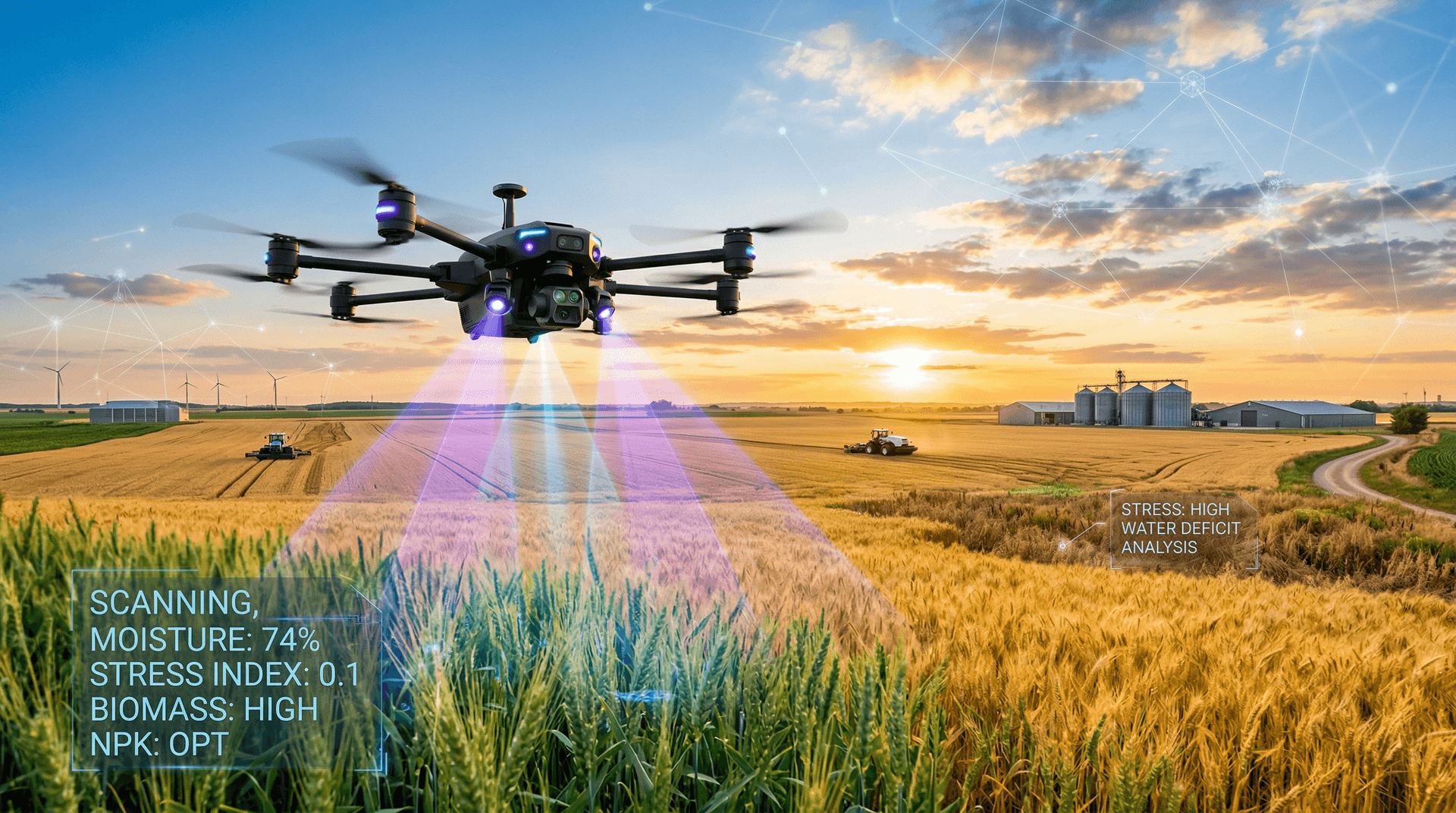
AgriTech International launched AI drones on April 12, 2026, scanning wheat fields worldwide for climate-resilient varieties. Blockchain secures the data. Eurasia Review reported 15% superior strains among 500 tested samples.
AI Drones Revolutionize Precision Wheat Selection
AI drones deploy multispectral cameras and LiDAR sensors to assess leaf water content, root depth, and stress tolerance. Machine learning algorithms analyze images in real time, scoring plant resilience on a 1-100 scale.
AgriTech International's trials identified 15% of 500 wheat strains as highly drought-resistant. DroneAg Labs validated 95% accuracy in field tests. Traditional scouting takes weeks; these drones complete scans in hours, slashing labor costs by 70%, per company data.
Pilots in Ukraine expanded coverage to 5,000 hectares last month, identifying 75 superior varieties for immediate breeding.
Blockchain Secures Data for Tokenized Seed Trading
AgriChain Blockchain logs all drone-captured data on a tamper-proof distributed ledger. Validator nodes confirm entries every 10 minutes, ensuring data integrity.
Core features include:
- Immutable records of genetic traits and performance metrics
- Smart contracts automating breeder royalties at 8% of sales
- Tokenized seed assets enabling fractional ownership for investors
Farmers query verified seed profiles via mobile apps. Full supply chain traceability spans from field selection to harvest and market sale. This model raised $12 million USD in seed token presales, according to AgriChain reports.
Climate Crisis Fuels AI Drone Adoption in Wheat
FAO data shows global wheat yields fell 8% in 2025 from erratic weather patterns. Heatwaves reduced India's output by 12% and US Midwest harvests by 10%.
AI drone projects now operate across Ukraine, Australia, and Kansas, covering 10,000 hectares in pilots. Partners exchange blockchain data to accelerate variety deployment. Iowa State University models predict 25% yield improvements under stress conditions by 2028.
Australia's Wheat Board integrated drone data last week, targeting 20% resilience gains for 2027 exports valued at $8 billion USD.
Financial Surge in AI Drone AgTech Investments
Tokenized wheat strains trade on DeFi platforms like AgriFi, where investors buy yield-linked fractions. PitchBook tracked $45 million USD raised last month across three firms.
Resilience Ventures led a $20 million USD Series A for DroneAg Labs, valuing the startup at $120 million USD post-money. AgriDrone Inc. (ADR) shares climbed 4.2% to $28.50 USD on Nasdaq, boosting market cap to $450 million USD.
AgriFi processes $10 million USD daily in crop futures volume. Farmers stake seed NFTs for 5% APR loans, with total value locked reaching $50 million USD. Agtech blockchain funds outperformed Bitcoin by 15% year-to-date, per CryptoCompare index.
CME Group launches wheat resilience futures next week, projecting $200 million USD initial volume based on pre-market interest.
Advanced Tech Stack Drives AI Drone Efficiency
NVIDIA Jetson Orin AI chips enable edge processing of 4K multispectral imagery at 30 frames per second. 5G networks uplink data to cloud blockchains with 99.9% uptime.
Open-source models from Hugging Face train on 10 petabytes of global wheat imagery. Quantum-resistant encryption from Post-Quantum secures transmissions; beta tests recorded zero breaches over 6 months.
Battery life hits 45 minutes per flight, with solar-assisted charging extending missions to 2 hours. Wiper systems handle dust in arid zones like Australia's outback.
Overcoming Challenges in Global AI Drone Rollout
Dust storms and short battery life initially limited operations to 70% efficiency. New wiper tech and swappable batteries now achieve 95% uptime, per field logs.
India's Wheat Board, Australian Grains Research, and US Department of Agriculture integrate the blockchain data. Polkadot parachains enable cross-chain data sharing with Ethereum and Solana networks.
Governments subsidize 30% of deployment costs, totaling $15 million USD YTD. Blockchain oracles link real yields to derivatives, hedging $100 million USD in farmer risk.
AI drones transform agriculture, stabilizing food prices and channeling $500 million USD in venture capital amid climate pressures. Investors eye 30% annualized returns from tokenized resilience assets by 2027.