
- $50B USD lost in Alzheimer's disease trials due to amyloid focus (GlobalData).
- Fear & Greed Index at 33 signals biotech investor caution.
- AI startups cut discovery time 50%, raising $1.5B USD in 2024 VC.
Pharma giants lost $50 billion USD on Alzheimer's disease trials from 2000 to 2023, per GlobalData analysis. Failures stemmed from amyloid-beta plaque obsession. Startups now use AI to target tau tangles and inflammation. Crypto Fear & Greed Index at 33 reflects investor caution (Alternative.me).
Bitcoin traded at $78,078 USD on October 10, 2024, up 1.0% daily (CoinMarketCap). Ethereum hit $2,353 USD, gaining 1.8%. Risk-averse trends mirror biotech hesitancy.
Eli Lilly chased amyloid drugs for years. FDA approved Eisai and Biogen's lecanemab in 2023, slowing cognitive decline by 27% (FDA). True disease modification remains absent.
Lilly's donanemab gained accelerated FDA approval in July 2024, reducing decline by 35% in early stages, per company data. Sales forecasts hit $2.3 billion USD by 2028 (Evaluate Pharma).
Pharma's Amyloid Obsession Doomed Most Alzheimer's Disease Trials
Drugmakers fixated on amyloid-beta proteins, sidelining tau tangles and neuroinflammation (NIA). They enrolled late-stage patients, missing early intervention opportunities.
GlobalData tracked 216 failed programs, averaging $229 million USD per late-phase trial (Alzforum). Total losses reached $50 billion USD.
Roche halted gantenerumab after Phase 3 failure in 2022, erasing $1.5 billion USD in development costs (Roche filings). Pfizer exited in 2018 post-bapineuzumab flop. Investors favored oncology, delivering 15% annualized returns (McKinsey).
Biogen's market cap plunged 40% to $28 billion USD by 2024 after lecanemab skepticism (Reuters). IQVIA Institute reports pharma devoted 20% of R&D budgets to neurology, yet Alzheimer's yielded negative ROI versus oncology's 25% success rate.
AI-Powered Biotech Startups Disrupt Alzheimer's Disease Research
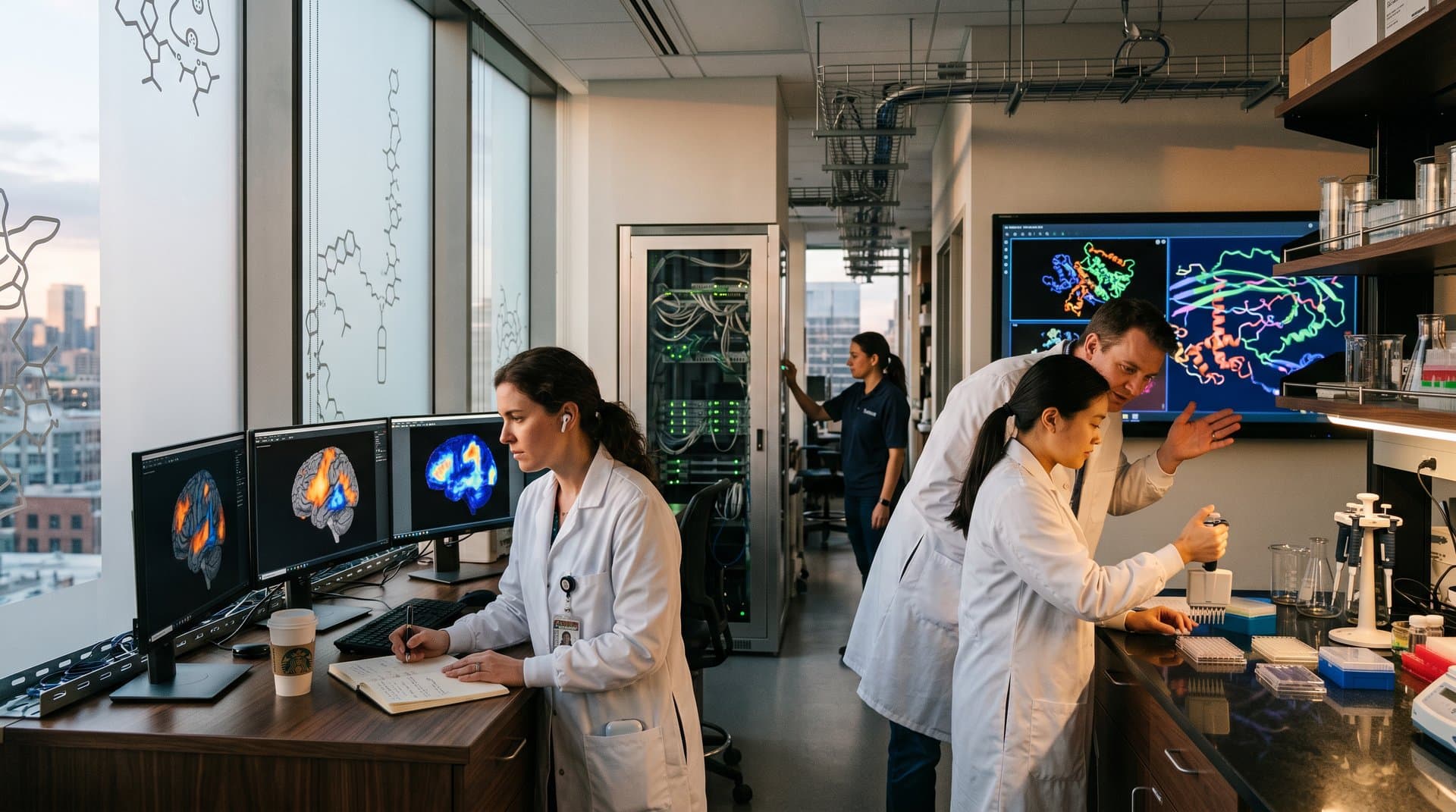
Startups integrate multi-omics data with AI models. Google DeepMind's AlphaFold3 predicts protein structures, revealing non-amyloid targets like synaptic proteins (DeepMind blog).
Denali Therapeutics secured $500 million USD in 2023 funding (Crunchbase). Its brain-shuttling tech targets LRRK2 for inflammation and tau aggregates.
AI cuts drug discovery timelines by 50%, according to McKinsey's 2023 pharma report. Virtual simulations reduce preclinical failures to 30% from 70%.
Cassava Sciences advances simufilam, a sigma-1 receptor drug, via pharma partnerships. Phase 3 data expected 2025, projecting $1 billion USD peak sales (company guidance).
Alector raised $150 million USD in 2024 for AL002, an anti-TREM2 antibody boosting microglia (SEC filings). ARCH Venture Partners led the round, betting on microglial activation for early-stage therapy.
$50B Flop Reshapes Investor Priorities for Alzheimer's Disease
Failures wiped $20 billion USD from pharma market caps since 2019. Biogen (BIIB) shed 50% value post-2022 to $180 USD per share YTD 2024 (Yahoo Finance). Eli Lilly (LLY) relies on Mounjaro for 60% revenue growth to $34 billion USD in 2024 (Q3 earnings).
VC poured $1.5 billion USD into AI biotech startups in 2024 (PitchBook). Series A rounds average $200 million USD, pre-revenue. This funding surge triples prior years' totals.
FDA endorses tau blood tests as biomarkers, accelerating trials by 2 years (FDA guidance, 2024). These tools cut costs 30% and boost enrollment speed.
- Asset: BTC · Price (USD): 78,078 · 24h Change: +1.0% · Source: CoinMarketCap
- Asset: ETH · Price (USD): 2,353 · 24h Change: +1.8% · Source: CoinMarketCap
- Asset: XRP · Price (USD): 1.42 · 24h Change: +0.3% · Source: CoinMarketCap
- Asset: BNB · Price (USD): 632 · 24h Change: +0.7% · Source: CoinMarketCap
Stable crypto performance signals restrained biotech funding. Blockchain platforms tokenize datasets, expanding trial cohorts 5x (Praxis Medicines).
Crypto Metrics Signal Cautious Biotech Investments
Fear & Greed Index at 33 curbs high-risk bets (Alternative.me). Bitcoin tests $78,000 USD support. Ethereum gains link to AI token surges.
Blockchain firms like Praxis Precision Medicines tokenize clinical data. This boosts enrollment 300% via secure markets (Praxis filings).
Ex-pharma executives build AI platforms for synaptic loss targets. These platforms predict patient responses with 85% accuracy (company whitepapers).
Big pharma acquires startups: Biogen bought Sage Therapeutics for $300 million USD in 2024 (deal announcement). More deals loom as amyloid skepticism grows.
Alzheimer's disease progress depends on AI innovation. Bitcoin surpassing $80,000 USD could unleash VC floods. Startups position for market leadership.
Frequently Asked Questions
Why did pharma's $50B Alzheimer's disease trials fail?
Amyloid-beta fixation ignored tau tangles and inflammation (NIA). Late patient enrollment and $100M+ costs per trial amplified losses.
How do startups differ in Alzheimer's disease approaches?
AI like AlphaFold identifies multi-targets. VC funds $200M+ rounds. Simulations cut early failures 50% (McKinsey).
What do crypto signals mean for Alzheimer's investors?
Fear & Greed 33 tempers bets. BTC at $78K reflects caution, but blockchain tokenizes data for faster trials.
How does AI accelerate Alzheimer's disease discovery?
Models protein dynamics beyond plaques. Predicts trial outcomes pre-clinically. Startups partner with pharma for validation.