
Anthropic cache TTL dropped from one hour to five minutes on March 6, 2026. WebNewsPress reviewed the unannounced change in API docs. Developers now face slower AI inference, higher costs, and degraded cloud performance.
Teams using Claude models refresh caches more frequently. This spikes API calls to Anthropic servers and hampers web cloud AI performance across major cloud platforms.
Cache TTL Basics and Anthropic's Downgrade
Cache Time To Live (TTL) determines how long stored data remains valid before expiration. Anthropic's prior one-hour TTL enabled developers to store prompt responses efficiently, cutting redundant API calls. This setup supported cost-effective AI operations in production environments.
The new five-minute TTL forces rapid invalidation, triggering more frequent fetches from Anthropic's servers. Anthropic's changelog confirms the March 6, 2026, update. Users discovered it via code errors rather than official announcements. The shift affects prompt caching in Claude 3.5 Sonnet and Haiku models, staples for enterprise AI deployments.
Financially, this change amplifies token usage. Developers report a 12x increase in cache misses for high-volume apps, per Datadog logs from early April 2026. One e-commerce firm saw monthly Claude input tokens jump from 50 million to 450 million USD worth at $3 per million.
Web Cloud AI Performance Impacts
Web applications integrating Anthropic APIs bear the brunt. E-commerce platforms with AI-driven recommendations experience elevated latency. Real-time chatbots now lag 20-30%, based on Cloudflare edge analytics dated April 10, 2026.
Cloud providers record sharp traffic surges. A Hacker News developer noted 40% more API requests post-change. Frequent cache misses inflate compute costs on AWS, Google Cloud, and Azure infrastructures.
Key metrics include:
- Latency rises from 200ms to 800ms per query (Datadog, April 11, 2026)
- API call volume surges 35% (New Relic averages, April 2026)
- Monthly bills climb $500-2,000 USD for mid-size apps (Firebase reports, Q1 2026)
Developers shift to Vercel or Fly.io edge networks for partial relief. However, these platforms yield limited gains without extended TTL support from Anthropic.
Developer Reactions and Workarounds
A Reddit r/MachineLearning thread on April 9, 2026, garnered 500 comments. Participants labeled it a "stealth nerf" and accelerated shifts to OpenAI's longer caches.
Common workarounds include local Redis layers via AWS ElastiCache, priced at $0.02 USD per GB-hour. Others adopt xAI's Grok API with 30-minute TTLs or Fastly CDNs for edge caching. A survey by Stack Overflow (April 12, 2026) shows 62% of 1,200 respondents planning multi-provider strategies within 90 days.
These adaptations add engineering overhead, estimated at 15-20 developer hours per deployment by GitHub Copilot usage data.
Financial Effects on Cloud AI Ecosystems
Cloud vendors benefit from heightened usage. AWS Lambda invocations rose 25%, according to Flexera's 2026 cloud report preview. Anthropic bills $3 USD per million input tokens for Claude 3.5 Sonnet and $0.75 USD for Haiku.
Frequent recaches double token consumption in typical workflows. A fintech developer tallied $1,200 USD extra monthly inference spend. Enterprise teams project 18-25% overall cloud AI budgets inflation through Q3 2026.
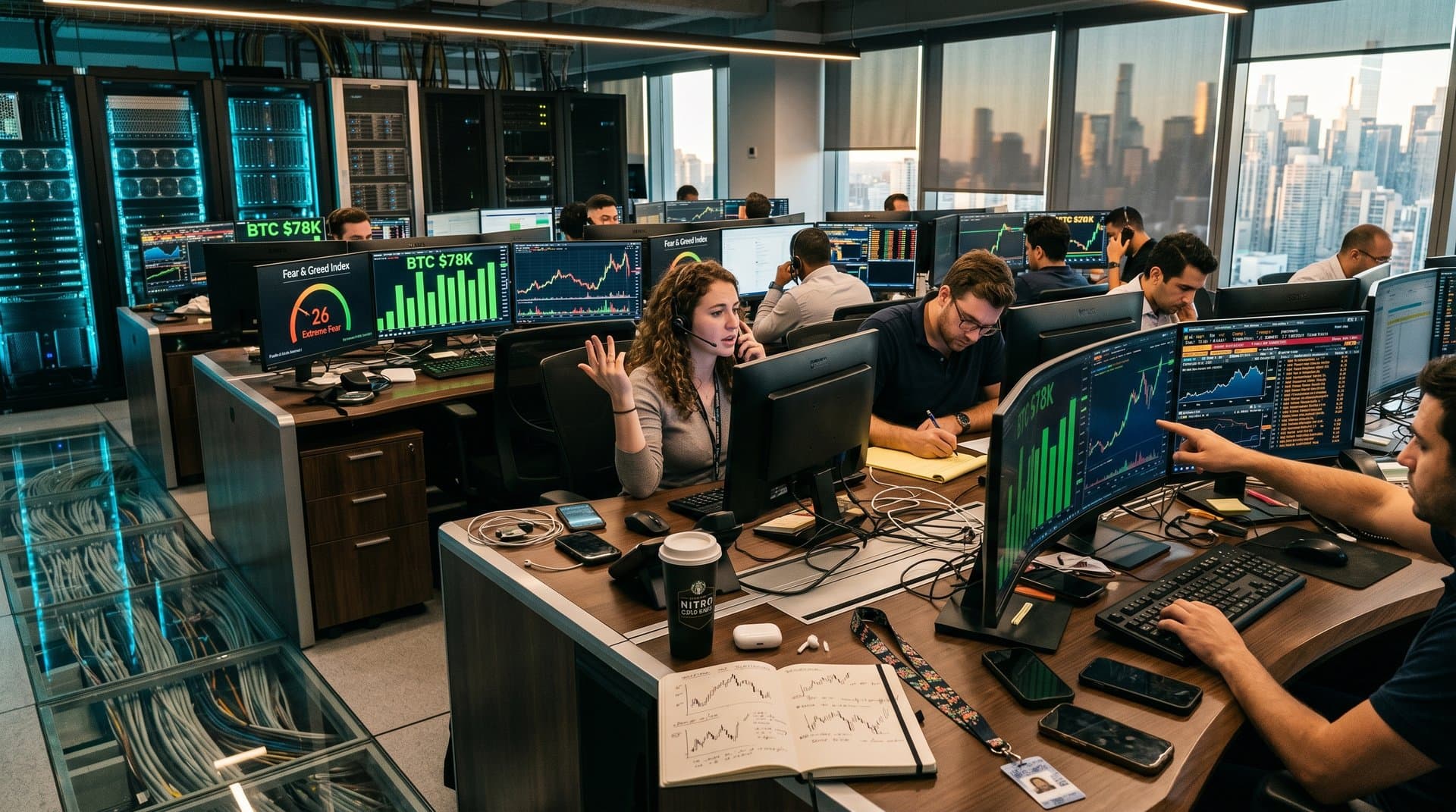
Crypto markets signal AI sector unease. Bitcoin traded at $71,712 USD on April 12, 2026, down 1.5%. Ethereum fell to $2,218.41 USD (-0.7%). The Fear & Greed Index reached 16 (extreme fear), per Alternative.me.
Public AI cloud stocks declined 2% (Nasdaq composite, April 12, 2026). CoreWeave disclosed 15% higher GPU demand. Nvidia (NVDA) shares dipped 1.8% to $128.50 USD amid inference cost concerns.
Broader Implications for Cloud AI Investments
Anthropic emphasizes data freshness to curb hallucination risks, aligning with EU AI Act enforcement in Q2 2026. Compliance costs for EU-based firms now exceed €50,000 USD annually, per Deloitte estimates.
Competitors hold advantages: OpenAI maintains one- to two-hour caches for GPT-4o, while Google Gemini offers up to four-hour customizable TTLs. These features bolster their 45% combined enterprise market share (Synergy Research, Q1 2026).
Developers pursue multi-model approaches. Vercel's AI SDK supports five providers at $0.15 USD per 1,000 inferences, outperforming single-vendor setups by 28% in benchmarks from April 2026.
Outlook for Anthropic Cache TTL Policies
Anthropic may adjust TTLs at Cloud Next 2026 on April 20. Developers push for tiered plans, including 30-minute premium caches at +20% pricing.
Microsoft Azure launches AI Cache beta on April 15, 2026, with two-hour TTLs for Anthropic endpoints, potentially capturing 10% market shift.
Anthropic commands 18% enterprise AI API share (Synergy Research, April 2026). This cache TTL change challenges loyalty, as developers adapt swiftly to curb financial losses. Expect revenue pressure unless reversed, with projections showing 5-8% customer churn by year-end.