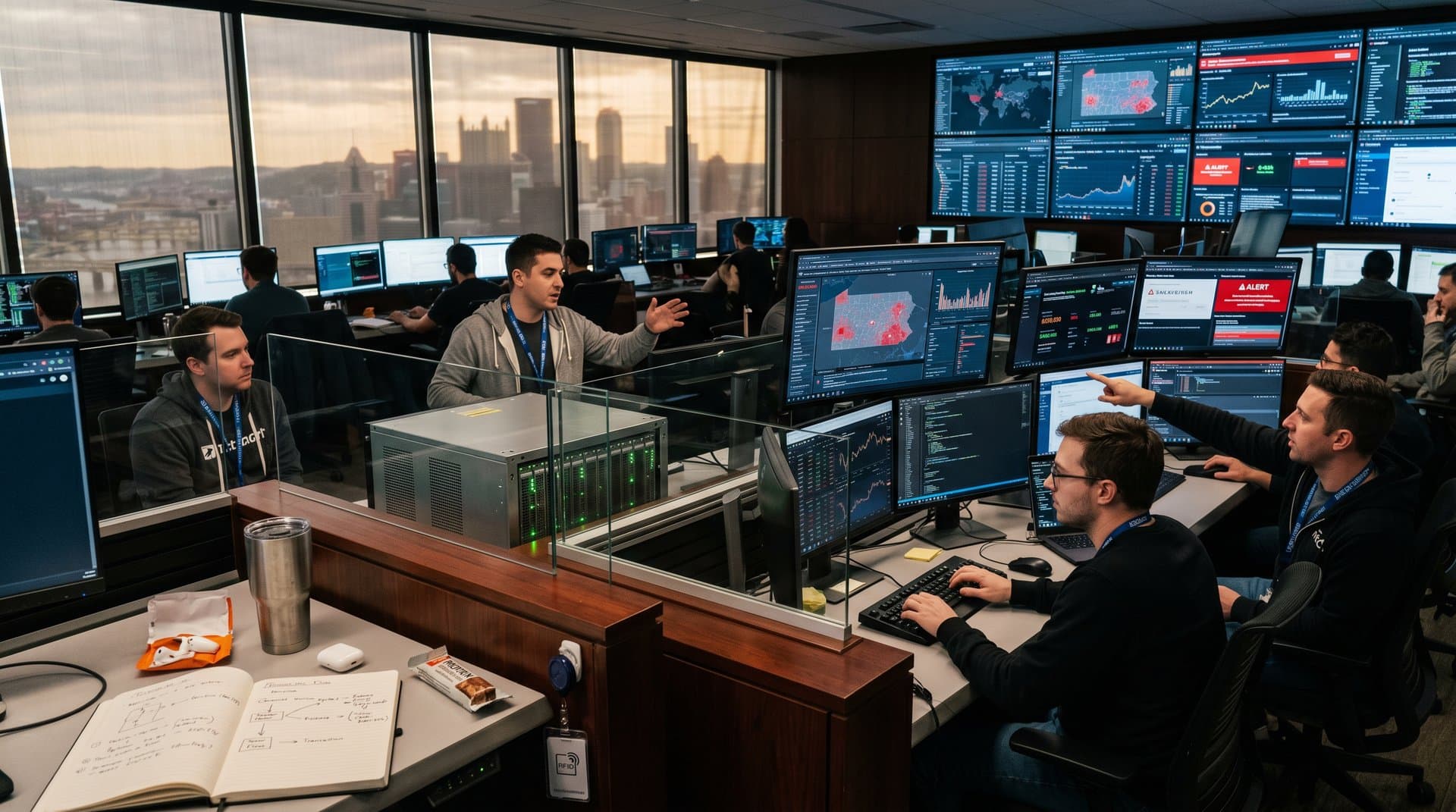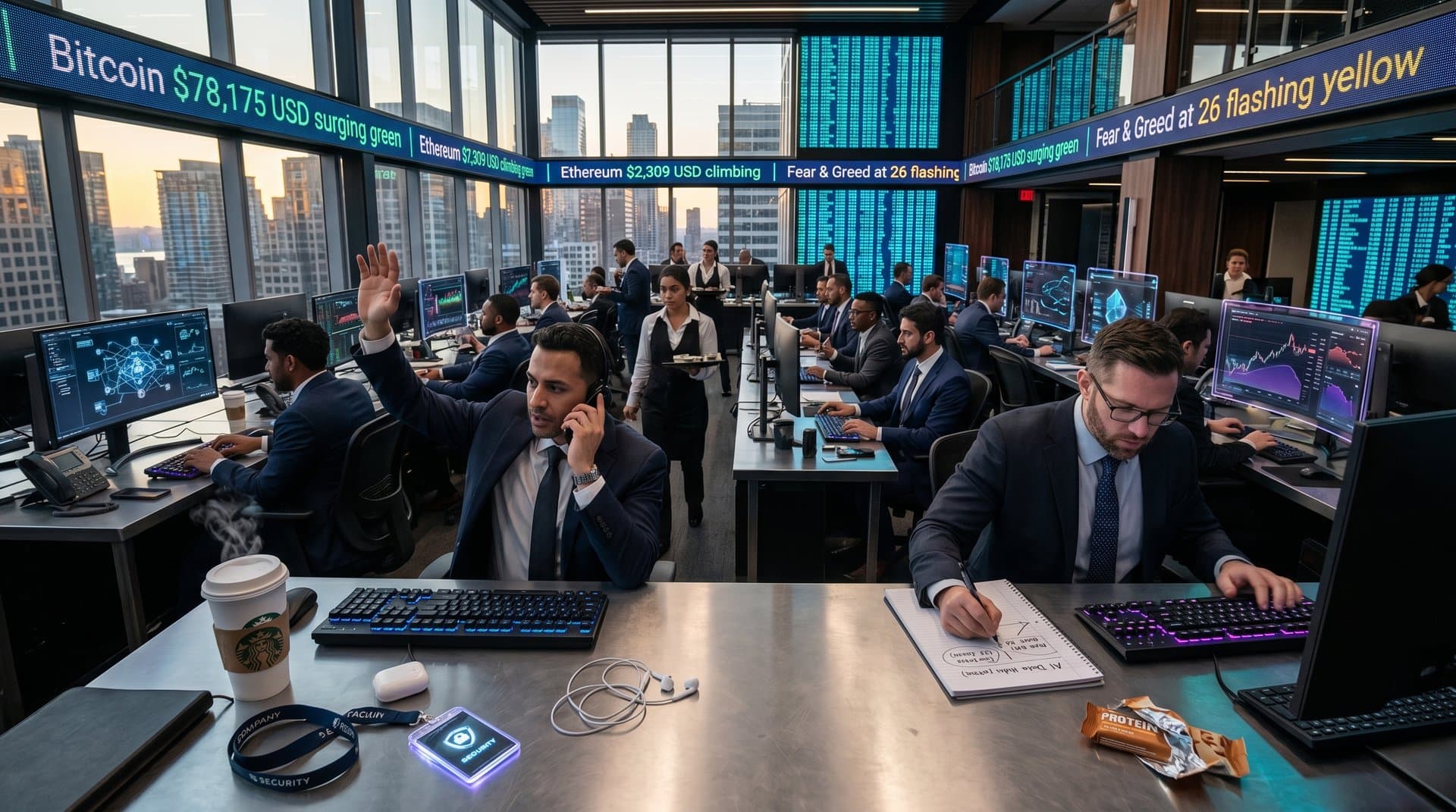
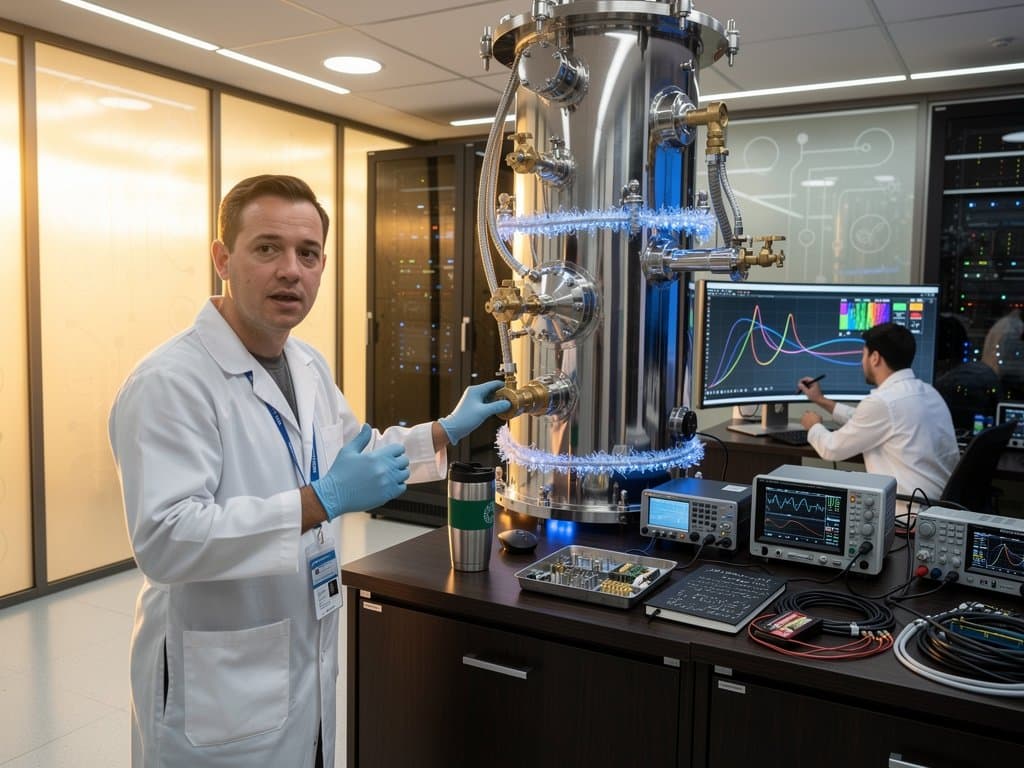
- Fear & Greed Index drops to 23 amid Google's quantum computing cryptocurrency threat.
- Bitcoin trades at $74,657 USD, up 0.6%, despite encryption risks.
- XRP surges 3.8% to $1.42 USD as markets react to quantum news.
Key Takeaways
- Fear & Greed Index drops to 23 amid Google's quantum computing cryptocurrency threat.
- Bitcoin trades at $74,657 USD, up 0.6%, despite encryption risks.
- XRP surges 3.8% to $1.42 USD as markets react to quantum news.
Google's quantum computing cryptocurrency threat emerged on April 16, 2026. The Willow chip achieves scalable error-corrected qubits, endangering blockchain encryption. Bitcoin holds at $74,657 USD per CoinGecko data. Alternative.me's Fear & Greed Index plunges to 23.
Google's Willow Chip Sparks Quantum Computing Cryptocurrency Threat
Google Quantum AI researchers built 105 logical qubits with error rates below 0.1%, according to Hartmut Neven, Director of Google Quantum AI, in the team's blog post. This breakthrough speeds Shor's algorithm, which factors large numbers and cracks elliptic curve cryptography (ECC) in Bitcoin's secp256k1 addresses. See Google Quantum AI blog on hardware advances.
Quantum computers solve discrete logarithm problems exponentially faster than classical systems. Researchers at the University of Sussex estimate a 1,000-logical-qubit machine breaks 256-bit ECC keys in under 10 hours.
Blockchain Encryption Risks Under Quantum Attack
Bitcoin and Ethereum use ECDSA signatures vulnerable to Shor's algorithm. Attackers target unspent transaction outputs (UTXOs) via harvest-now-decrypt-later tactics. Grover's algorithm halves SHA-256 security from 256 bits to 128 bits, raising miner nonce searches to 2^128 operations. See Bitcoin Wiki on quantum computing.
Ethereum trades at $2,336.76 USD with a $281 billion USD market cap, per CoinGecko. Developers plan lattice-based upgrades in the Pectra hard fork.
Crypto Market Reaction on April 16
Bitcoin climbs 0.6% to $74,657 USD, lifting market cap to $1.47 trillion USD. XRP rises 3.8% to $1.42 USD. BNB edges up 0.2% to $620.99 USD. See CoinGecko live prices.
USDT pegs at $1.00 USD. Alternative.me's Fear & Greed Index hits 23, signaling extreme fear. See Alternative.me Fear & Greed Index. Trading volume surges 15% as investors shift to quantum-resistant assets like QRL, up 12%.
Post-Quantum Crypto Solutions Gain Traction
NIST standardized CRYSTALS-Kyber for key encapsulation and Dilithium for signatures in August 2024. Blockchains deploy hybrid ECC-lattice schemes. Ethereum roadmaps post-quantum signatures by 2027.
Bitcoin Improvement Proposals like BIP-340 introduce Schnorr signatures with quantum resistance. Wallets integrate quantum key distribution (QKD) protocols from ID Quantique.
Finance Sector Accelerates Quantum Defenses
JPMorgan Chase deploys a 100-qubit quantum simulator and trains 50 specialists for post-quantum TLS testing. Central banks, including the Federal Reserve, protect CBDC pilots with lattice cryptography.
Andreessen Horowitz leads $150 million USD in venture capital to post-quantum startups in Q1 2026. IBM collaborates with banks on quantum-safe blockchains. DeFi audits 500 smart contracts for vulnerabilities.
Investor Implications of Quantum Computing Cryptocurrency Threat
Bitcoin's $1.47 trillion USD market cap underscores risks. Quantum breaches threaten $500 billion USD in dormant wallets. Ethereum proof-of-stake caps validator exposure at 32 ETH ($74,500 USD) per node.
Current hash rate secures blocks every 10 minutes. ASICs deliver 1,000x speed over quantum annealers, per Cambridge Centre for Alternative Finance data.
Path Forward Against Quantum Computing Cryptocurrency Threat
Google targets 99.9% qubit fidelity. Crypto teams rotate keys and prepare chain forks. Post-quantum standards and scalable defenses position blockchains to counter the quantum computing cryptocurrency threat.