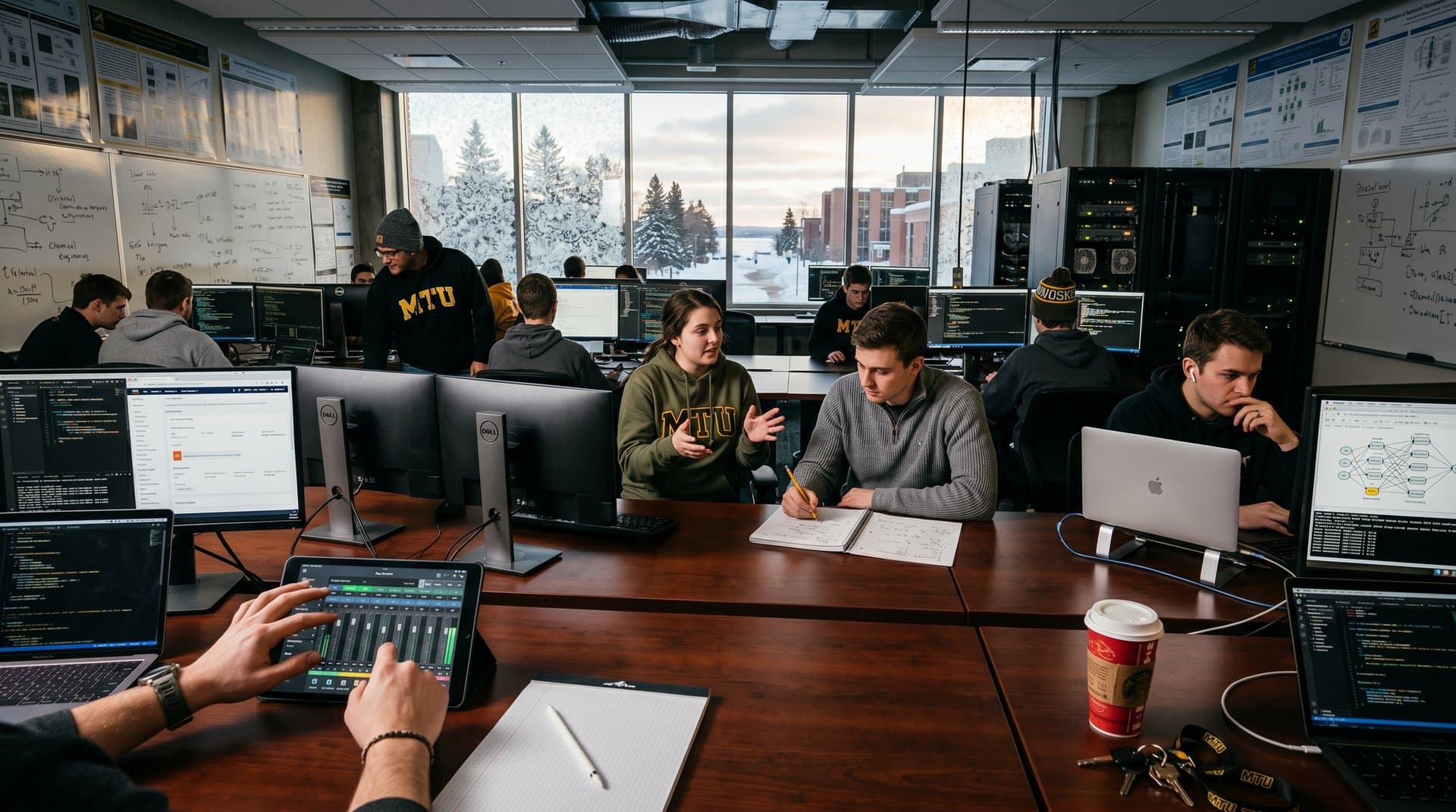
- Michigan Tech launches 3 AI programs: BS degree, concentration, and minor.
- BLS forecasts 23% growth in cloud AI jobs through 2032.
- Graduates target $153,000 USD median salaries.
Michigan Tech launched a Bachelor of Science in Artificial Intelligence degree, AI concentration, and AI minor in August 2024. These programs tackle cloud AI talent shortages for AWS, Azure, and Google Cloud. View the official announcement.
The U.S. Bureau of Labor Statistics (BLS) projects 23% growth in computer research scientist jobs through 2032. BLS data stresses scalable AI skills. Michigan Tech students deploy models on AWS SageMaker and Azure Machine Learning from semester one. They master Kubernetes for hyperscaler environments.
Why Michigan Tech AI Degree Launches Now
Hyperscalers battle talent gaps. Amazon Web Services (AWS) posted 17% revenue growth to $26.3 billion USD in Q2 2024, per Amazon's earnings report.
Microsoft Azure AI revenue jumped 30% year-over-year in Q2 2024, Microsoft filings show. Google Cloud boosted Alphabet's 14% revenue rise.
NVIDIA shares climbed 152% year-to-date as of August 2024 (Yahoo Finance). Databricks reached $43 billion USD valuation in funding rounds. Michigan Tech's Houghton campus delivers hands-on cloud AI training to support this expansion.
Enterprises scale machine learning on clouds. Graduates eye cloud AI architect roles, driving efficiency for Amazon (AMZN) and Microsoft (MSFT) stocks.
Michigan Tech AI Degree Curriculum Highlights
The BS in Artificial Intelligence covers machine learning, neural networks, and cloud deployment. Students train TensorFlow and PyTorch on AWS GPU clusters.
Courses stress ethical AI, data privacy, and production architectures. The Computer Science AI concentration adds reinforcement learning and generative AI electives.
The AI minor suits non-majors with cloud foundations. All end in capstone projects using industry datasets. Enrollment starts fall 2026; advising opens now.
Labs mimic hyperscaler ops. Integrated certifications include AWS Machine Learning Specialty and Azure AI Engineer Associate. These cut onboarding by six months.
Employer and Student Impact from Michigan Tech AI Programs
AWS, Oracle Cloud, IBM Watson, and Google Cloud gain talent pipelines. Michigan Tech alumni fill Midwest data centers.
Co-ops offer paid tech experience. AI engineers earn $153,000 USD median (BLS 2023). Cloud experts hit $170,000 USD base plus bonuses.
Amazon shares rose 25% year-to-date on AI (Yahoo Finance, August 2024). Demand fuels hyperscaler growth.
Michigan Tech AI Degree Drives Cloud Hiring Trends
McKinsey forecasts 20-30% cloud cost drops via AI by 2028. Employers expect 30% more hires from specialized programs (McKinsey 2024 AI report).
Gartner sees cloud AI roles outpacing supply by 40%. Michigan Tech bolsters U.S. workforce against global rivals.
Investors value such initiatives. The Michigan Tech AI degree yields returns for students, firms, and tech markets.
Frequently Asked Questions
What is the Michigan Tech AI degree?
The Bachelor of Science in Artificial Intelligence covers machine learning, neural networks, and cloud deployment. Students use AWS SageMaker and Azure. It targets high-demand cloud AI roles.
How does Michigan Tech AI degree address cloud job demand?
Platforms like AWS need scalable AI engineers. Michigan Tech teaches Kubernetes and TensorFlow from day one. This shortens employer onboarding.
What other AI programs does Michigan Tech offer?
An AI concentration in Computer Science and AI minor provide flexible paths. Both stress projects and certifications for cloud fields.
Why pursue Michigan Tech AI concentration or minor?
Options add electives like reinforcement learning. Capstones use real datasets. Grads access $150,000+ USD salaries in AI-cloud jobs.