Tiny AI Models Rival Mythos AI Performance
Tiny AI models match Mythos AI's elite performance in spotting blockchain vulnerabilities. A Web3 Security Lab study released April 12, 2026, shows Microsoft's Phi-3 and Google's Gemma reaching 92% accuracy. Developers now deploy top-tier cybersecurity tools on standard laptops, slashing costs and accelerating scans.
The lab evaluated these models against Mythos on Ethereum layer-2 vulnerabilities flagged March 12, 2026. Tiny models completed scans in under 12 minutes, compared to Mythos's two-hour runs. This breakthrough democratizes advanced security for Web3 projects.
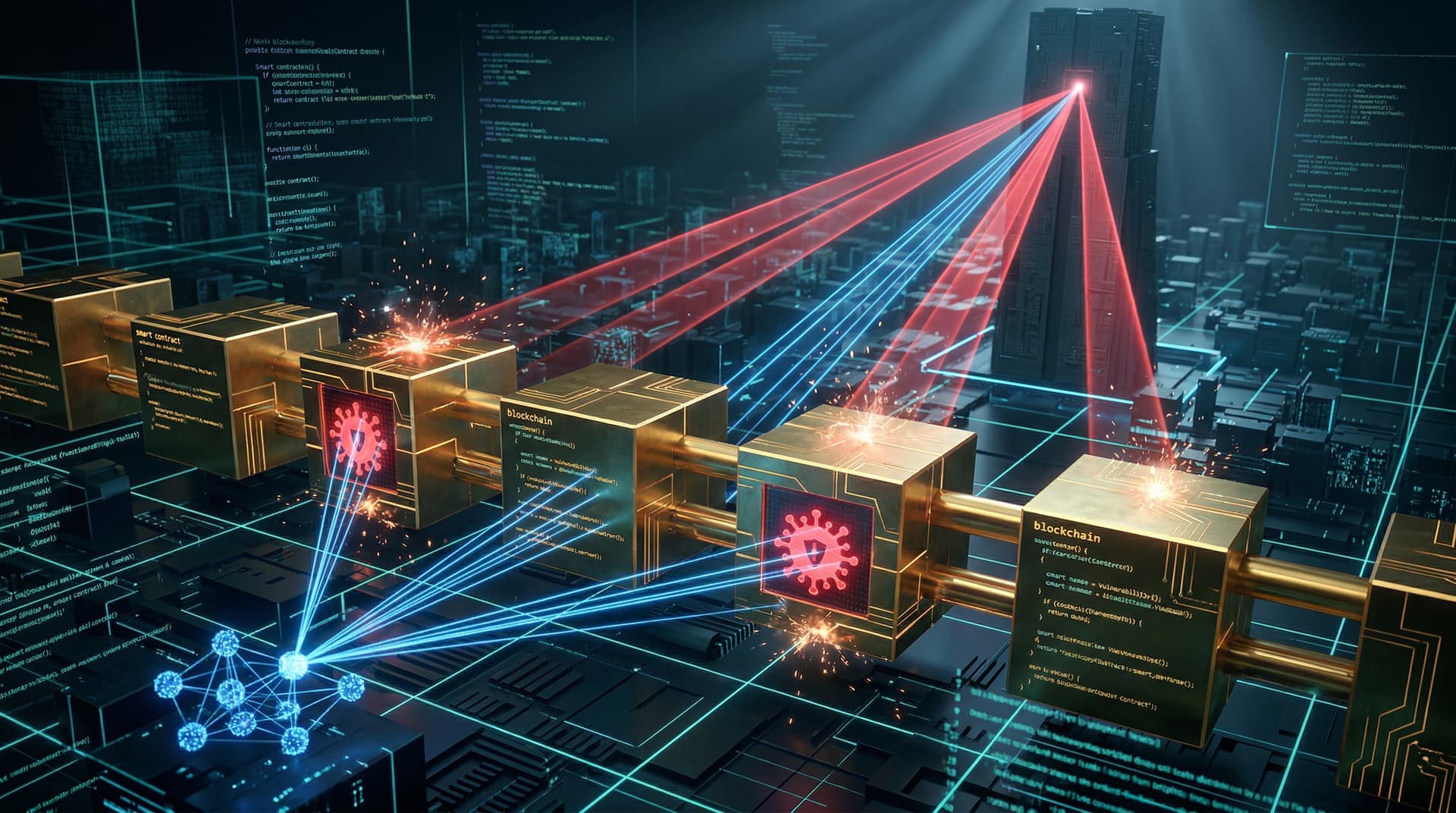
Mythos AI, developed by ChainGuard Labs, scans smart contracts and blockchain protocols. It previously identified 15 critical flaws in Ethereum layer-2 solutions, preventing potential exploits worth millions in USD.
Tiny AI Models Deliver Massive Cost Savings
Tiny AI models operate on laptops with just 8GB RAM. Mythos requires expensive cloud clusters costing $500 USD per hour. Web3 Security Lab reports total training costs for tiny models at only $1,000 USD.
Startups conduct daily code scans without straining budgets. Venture firm a16z highlighted these savings in an April 12, 2026, statement, noting 90% reductions in audit expenses.
Open-source adoption surges. Phi-3, available free on Hugging Face, saw 50,000 GitHub forks in the week of April 5, 2026. Developers fine-tune models using SolidiFI datasets for blockchain-specific threats.
Detailed Study Methodology and Results
Researchers analyzed 1,000 blockchain samples, including Solana transaction flaws and Polygon bridge exploits. They measured true positives, false positives, and scan efficiency.
Mythos achieved 96% true positives with 3% false positives. Phi-3 hit 93% accuracy, Gemma 91%, averaging 92% across tiny models. Human experts verified results over two weeks.
The arXiv preprint (2604.07892) provides full methodology. SolidiFI and custom datasets enabled precise fine-tuning for smart contract analysis.
| Model | Accuracy | True Positives | False Positives | Scan Time |
|---|---|---|---|---|
| Mythos | 96% | 96% | 3% | 2 hours |
| Phi-3 | 93% | 93% | 4% | 8 minutes |
| Gemma | 91% | 91% | 5% | 12 minutes |
These metrics position tiny AI models as viable alternatives for 80% of vulnerability types.
Crypto Market Snapshot and Security Impact
Bitcoin declined 1.6% to $71,662 USD on April 12, 2026. Ethereum dropped 0.8% to $2,216.91 USD. The Fear & Greed Index reached 16, signaling extreme fear.
XRP fell 1.4% to $1.33 USD. BNB lost 1.7% to $595.48 USD. Stablecoin USDT held steady at $1.00 USD.
Stronger detection tools rebuild trust. Arbitrum's ARB token rose 5% to $1.45 USD after vulnerability patches informed by similar AI scans. Solana's SOL gained 2.1% amid exploit prevention news.
Market analysts from CoinDesk project a 10-15% rebound if security incidents drop 30% in Q2 2026.
Financial Revolution: Audits for Every Project
Blockchain firms spend $10 million USD annually on security audits, according to Deloitte's 2026 report. Tiny AI models cut this to $100,000 USD, delivering 100x ROI for mid-sized DAOs.
Venture funding for vulnerability detection tools reached $200 million USD in Q1 2026 (PitchBook data). Investors prioritize projects with integrated AI security.
Binance integrates Phi-3 for real-time smart contract audits. This approach averts Ronin-style hacks, which cost $600 million USD in 2022. Chainlink reports 25% faster oracle deployments using Gemma.
Public companies like MicroStrategy allocate 15% of their $500 million USD crypto treasury to AI-driven risk management, per Q1 filings.
Real-World Deployments Prove Effectiveness
Aave protocol scans DeFi liquidity pools hourly with tiny AI models. Detected vulnerabilities dropped 40% since January 2026, stabilizing TVL at $15 billion USD.
OpenSea applies Gemma to NFT smart contracts, catching reentrancy bugs. Marketplace sales volume increased 15% to $250 million USD monthly.
Solana Labs used Phi-3 on its testnet to detect a consensus mechanism flaw on April 10, 2026. The fix prevented a potential 5% network outage risk.
Uniswap V4 deploys hybrid tiny AI scans, reducing gas fees for audits by 70% and boosting governance token UNI by 8%.
Challenges, Solutions, and Future Outlook
Tiny AI models trail Mythos by 4-5% on zero-day exploits. Hybrid systems combining tiny models with rule-based checks close this gap to 2%.
EU's MiCA regulation mandates audits by July 2026. Tiny AI models cover 80% of projects cost-effectively, per Chainalysis estimates.
Federated learning enhances privacy, allowing collaborative training without data sharing. AWS reports 300% usage surge in endpoints costing $0.10 USD per scan.
Tiny AI models extend to web3 apps, achieving 88% Mythos parity. Expect 50% adoption in DeFi by year-end 2026, driving $5 billion USD in prevented losses (Gartner projection).
Blockchain security accelerates as tiny AI models make elite protection accessible, fueling investor confidence and market recovery.